
Friday, October 31, 2014

Monday, October 20, 2014
3 Weeks Before the Event!
Last Sunday (Oct 12), I had two meetings. The first was with the High Council for our stake, in which I had to present our current readiness to the Stake Presidency and the members of the High Council. I also was able to make a few requests for what we needed from the High Council. This included ushers and technology set up for the day of the event. The second was another meeting with the Family History Consultants from the various wards to continue our efforts in planning the event.
The High Councilman over family history who I have been working with was going out of town and would not be present for either meeting, so he and I met Friday afternoon to help me prepare for both meetings. It was in this meeting that I really learned the most. I learned that preparation really does help you be less nervous. I was nervous for meeting with the High Council, but he helped me know exactly what I needed to tell them and ask them for, which helped me feel much less nervous. I also learned that to have a really effective meeting, you need to know what you want from the others in attendance and the meeting needs to have a specific goal. For the meeting with the family history consultants, we set the goal of collecting 15 names of possible presenters.
I emailed all the family history consultants in our stake on Friday night to make sure they knew about the meeting on Sunday. As a result, I ended up with about ten people there, total. I was nervous that we would be unable to meet our goal, but I expressed this goal to those in attendance, and they surprised me. We were able to come up with about 13 names and then two more pools of people from which we might pull presenters. We had met my goal! I believe that letting everyone in attendance know the purpose and goal of the meeting allowed us to meet the goal. In the future, I will have a goal for any meeting I hold. If a meeting doesn't have a goal, then it is probably not going to be a worthwhile meeting, so there is no point in having it. If a meeting does have a goal, then I need to share that goal with everyone in attendance in order to reach that goal in the most efficient way.
The High Councilman over family history who I have been working with was going out of town and would not be present for either meeting, so he and I met Friday afternoon to help me prepare for both meetings. It was in this meeting that I really learned the most. I learned that preparation really does help you be less nervous. I was nervous for meeting with the High Council, but he helped me know exactly what I needed to tell them and ask them for, which helped me feel much less nervous. I also learned that to have a really effective meeting, you need to know what you want from the others in attendance and the meeting needs to have a specific goal. For the meeting with the family history consultants, we set the goal of collecting 15 names of possible presenters.
I emailed all the family history consultants in our stake on Friday night to make sure they knew about the meeting on Sunday. As a result, I ended up with about ten people there, total. I was nervous that we would be unable to meet our goal, but I expressed this goal to those in attendance, and they surprised me. We were able to come up with about 13 names and then two more pools of people from which we might pull presenters. We had met my goal! I believe that letting everyone in attendance know the purpose and goal of the meeting allowed us to meet the goal. In the future, I will have a goal for any meeting I hold. If a meeting doesn't have a goal, then it is probably not going to be a worthwhile meeting, so there is no point in having it. If a meeting does have a goal, then I need to share that goal with everyone in attendance in order to reach that goal in the most efficient way.
Tuesday, September 30, 2014
Second Week of Planning
I had another set of planning meetings this past Sunday, first with the high councilman and then with a couple of the other family history consultants. I realized I had forgotten to do one of the things we had discussed me doing at our previous meeting. I definitely learned from this that I need to write down the things I'm supposed to do as soon as the meeting is over, or even during the meeting as soon as the decision is made so that I don't forget. So this time, I made a list on my phone of things I should be working on before our next meeting.
I also learned that if there is more than a week between meetings, I need to send out a reminder to those who are supposed to attend. We planned this meeting at our previous meeting, but only one or two of the consultants remembered and I reminded another, so we only had three consultants there. From now on, I will be sending out reminders a day or two before every meeting.
I began feeling a little overwhelmed with how much there is to do to finish planning this fair and the short amount of time there is left to plan it in. I was grateful once again for the guidance of my high councilman because without him, I would probably have no clue what all needed to be done, how to do it, or when it needed to be done by. I have a lot to before our next meeting, but I plan to get all of it done this time.
I also learned that if there is more than a week between meetings, I need to send out a reminder to those who are supposed to attend. We planned this meeting at our previous meeting, but only one or two of the consultants remembered and I reminded another, so we only had three consultants there. From now on, I will be sending out reminders a day or two before every meeting.
I began feeling a little overwhelmed with how much there is to do to finish planning this fair and the short amount of time there is left to plan it in. I was grateful once again for the guidance of my high councilman because without him, I would probably have no clue what all needed to be done, how to do it, or when it needed to be done by. I have a lot to before our next meeting, but I plan to get all of it done this time.
First Week of Planning
September 20, 2014
I had two meetings last week to begin planning the Family History Fair. The first was with the High Councilman, and the main purpose was to get the two of us on the same page regarding our goals for the fair and to plan the second meeting, which would be with the Family History Consultants from the six wards in our stake. We started thinking about who all we wanted to come to the fair. I am in a Student Married Stake, so we knew they would be part of the intended audience, but did we also want to invite the Young Single Adult Stakes? He also told me that he would take about 10 minutes at the beginning of the second meeting to conduct some business and then turn the time over to me to use however I wanted.
Our second meeting was on Sunday, so that morning, I looked through some of the resources available for classes at the fair, I laid out a possible general schedule, and I came up with a list of things I wanted to talk about with the consultants. Mainly, I wanted to get their ideas and brainstorm with them about what they felt their wards would benefit from. Before the meeting the High Councilman came to me and told me he had spoken with the Stake President again. The Stake President had taken the idea of this Fair to a meeting with other Stake Presidents in the area, and many of them were really interested in participating. Suddenly our audience had become a whole lot bigger. This was very exciting to me because I was a little concerned there would be a lack of interest.
At the meeting with the other consultants, I was amazed at their ingenuity and interest in this project. As soon as I opened the floor to them to start brainstorming, there was a flood of ideas flowing! They had so many great thoughts about how to help participants really be involved with their family history, not just listening to classes. I can't wait to get started on implementing their ideas. I also asked for volunteers and delegated a few responsibilities to other members of this group, who have become the planning committee for this activity.
After the meeting, I registered our Stake online for the Family History Fair. There were a few technological issues, but I emailed their support team, and these issued were resolved without too much hassle.
It's very exciting to finally really be getting started, but I also now realize that this is a larger undertaking than I realized. However, with the help I am receiving, I don't feel too overwhelmed. At least not yet. :)
Through these first few experiences with planning the Fair, I have learned how important the people involved in the planning are. The High Councilman has really helped guide me on how to get started, what I should be looking at and thinking about. He also has helped me connect to the Family History Consultants so that I would have a committee to assist in the planning of this activity. He has been an invaluable connection to Stake leaders who can really provide the motivation for attendance at the conference.
I was completely amazed by the brilliant ideas of the family history consultants. I am so grateful for their help and enthusiasm. I really believe that they, not I, will make this Fair great. They taught me in this one meeting that a group of people brainstorming and planning together can come up with something greater than one person alone can.
I now know that everyone involved in planning and organizing an activity is important to what the final product will be. When I plan events in the future, I will make sure I am working with people who really care how the event will turn out, and they will provide the things that will turn what was a good idea into a great activity.
I had two meetings last week to begin planning the Family History Fair. The first was with the High Councilman, and the main purpose was to get the two of us on the same page regarding our goals for the fair and to plan the second meeting, which would be with the Family History Consultants from the six wards in our stake. We started thinking about who all we wanted to come to the fair. I am in a Student Married Stake, so we knew they would be part of the intended audience, but did we also want to invite the Young Single Adult Stakes? He also told me that he would take about 10 minutes at the beginning of the second meeting to conduct some business and then turn the time over to me to use however I wanted.
Our second meeting was on Sunday, so that morning, I looked through some of the resources available for classes at the fair, I laid out a possible general schedule, and I came up with a list of things I wanted to talk about with the consultants. Mainly, I wanted to get their ideas and brainstorm with them about what they felt their wards would benefit from. Before the meeting the High Councilman came to me and told me he had spoken with the Stake President again. The Stake President had taken the idea of this Fair to a meeting with other Stake Presidents in the area, and many of them were really interested in participating. Suddenly our audience had become a whole lot bigger. This was very exciting to me because I was a little concerned there would be a lack of interest.
At the meeting with the other consultants, I was amazed at their ingenuity and interest in this project. As soon as I opened the floor to them to start brainstorming, there was a flood of ideas flowing! They had so many great thoughts about how to help participants really be involved with their family history, not just listening to classes. I can't wait to get started on implementing their ideas. I also asked for volunteers and delegated a few responsibilities to other members of this group, who have become the planning committee for this activity.
After the meeting, I registered our Stake online for the Family History Fair. There were a few technological issues, but I emailed their support team, and these issued were resolved without too much hassle.
It's very exciting to finally really be getting started, but I also now realize that this is a larger undertaking than I realized. However, with the help I am receiving, I don't feel too overwhelmed. At least not yet. :)
Through these first few experiences with planning the Fair, I have learned how important the people involved in the planning are. The High Councilman has really helped guide me on how to get started, what I should be looking at and thinking about. He also has helped me connect to the Family History Consultants so that I would have a committee to assist in the planning of this activity. He has been an invaluable connection to Stake leaders who can really provide the motivation for attendance at the conference.
I was completely amazed by the brilliant ideas of the family history consultants. I am so grateful for their help and enthusiasm. I really believe that they, not I, will make this Fair great. They taught me in this one meeting that a group of people brainstorming and planning together can come up with something greater than one person alone can.
I now know that everyone involved in planning and organizing an activity is important to what the final product will be. When I plan events in the future, I will make sure I am working with people who really care how the event will turn out, and they will provide the things that will turn what was a good idea into a great activity.
Saturday, September 20, 2014
Background
Okay, before I get started, I want to give some background information about why I chose a Family History Fair for my EDGE project, and provide some terminology might be unfamiliar to some.
I am a member of the Church of Jesus Christ of Latter-day Saints, and as such, I believe in the importance of learning about my ancestors. The Church has a lot of resources for researching family history, and these resources are only growing along with our Leaders' encouragement to search for our own families. About a year ago, I was called (along with my husband) to be a Family History Consultant in my ward.
Okay, this is where that terminology I mentioned comes in. A ward
is a congregation that meets together every Sunday for worship. It is led by a Bishop. Multiple wards in a specific area are organized into a stake
to do activities together, hold conferences together, etc. A stake is led by a Stake President and a Stake Presidency (the president, two councilors, and a secretary). There is also a Stake High Council involved in helping the Stake President oversee the individual wards and to plan activities and such for the stake.Back to what I was saying. As a Family History Consultants, my husband and I taught a class on how to do family history research. As I was preparing for this class and beginning to try to do my own family history research, I discovered that through lds.org, I could use resources from the Church's rootstech conference (which is a very big conference holding classes to help people learn how to do family history work) to plan a Family History Fair for my stake. I took this idea to the High Councilman (see above) in charge of overseeing family history efforts in our stake, and he approved. This summer, I wrote a proposal for the activity, which he took to the Stake High Council meeting. They chose a date this fall for which we could plan our Fair. However, we had to wait for the summer to end so that I was back in town to really begin planning the Fair.
I am a member of the Church of Jesus Christ of Latter-day Saints, and as such, I believe in the importance of learning about my ancestors. The Church has a lot of resources for researching family history, and these resources are only growing along with our Leaders' encouragement to search for our own families. About a year ago, I was called (along with my husband) to be a Family History Consultant in my ward.
Okay, this is where that terminology I mentioned comes in. A ward
is a congregation that meets together every Sunday for worship. It is led by a Bishop. Multiple wards in a specific area are organized into a stake
to do activities together, hold conferences together, etc. A stake is led by a Stake President and a Stake Presidency (the president, two councilors, and a secretary). There is also a Stake High Council involved in helping the Stake President oversee the individual wards and to plan activities and such for the stake.Back to what I was saying. As a Family History Consultants, my husband and I taught a class on how to do family history research. As I was preparing for this class and beginning to try to do my own family history research, I discovered that through lds.org, I could use resources from the Church's rootstech conference (which is a very big conference holding classes to help people learn how to do family history work) to plan a Family History Fair for my stake. I took this idea to the High Councilman (see above) in charge of overseeing family history efforts in our stake, and he approved. This summer, I wrote a proposal for the activity, which he took to the Stake High Council meeting. They chose a date this fall for which we could plan our Fair. However, we had to wait for the summer to end so that I was back in town to really begin planning the Fair.
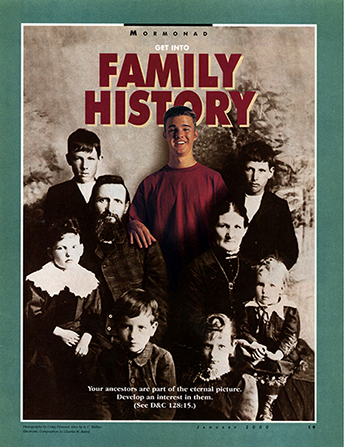 |
| Picture from https://www.lds.org/media-library/images/mormonad-family-history-1118316?lang=eng&category= |
Tuesday, February 25, 2014
Welcome!
Welcome to my EDGE project blog! Here I will be posting all the updates on the progress of my EDGE project!
Subscribe to:
Posts (Atom)